TIPI

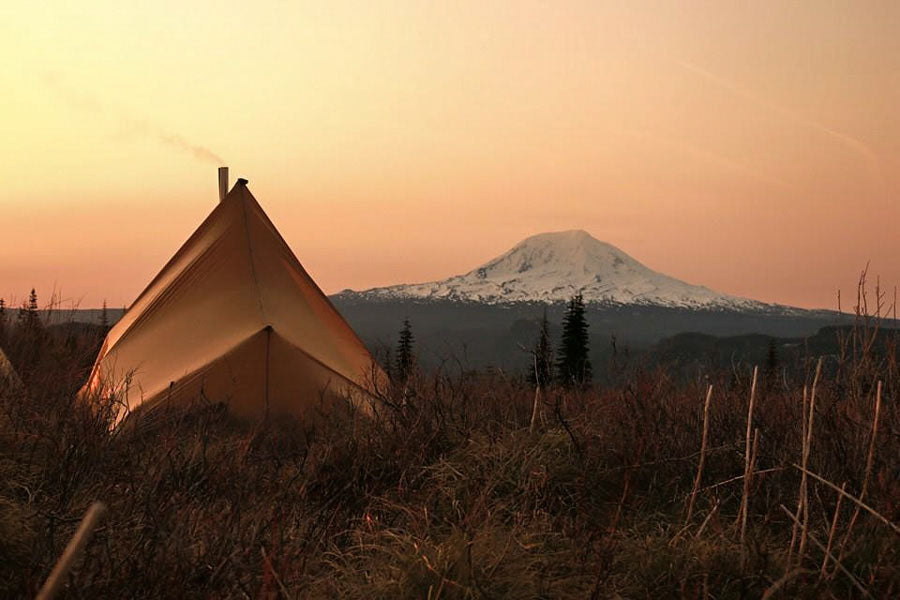
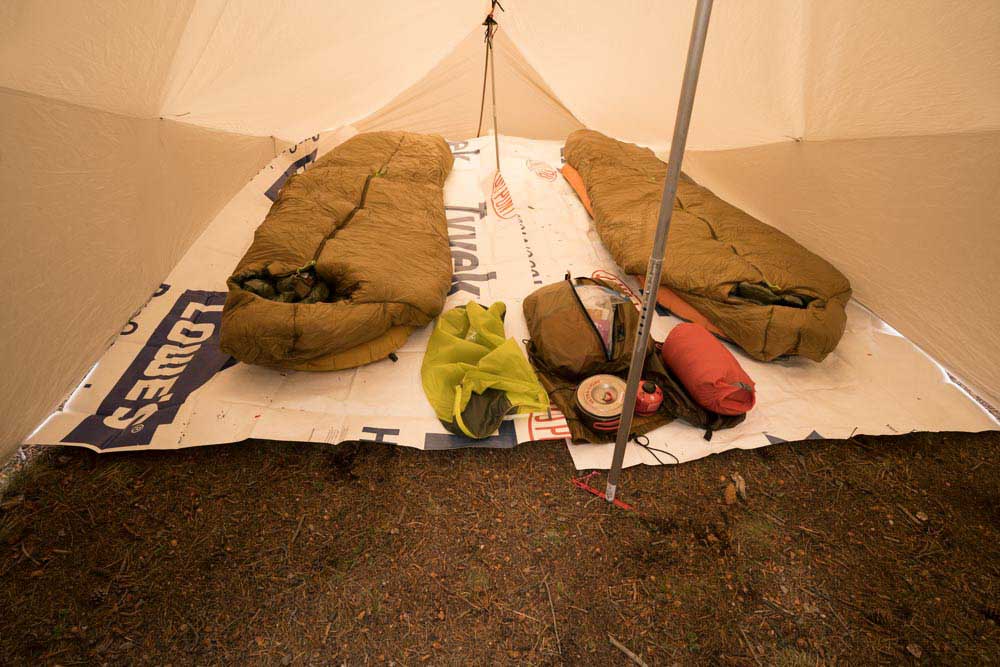
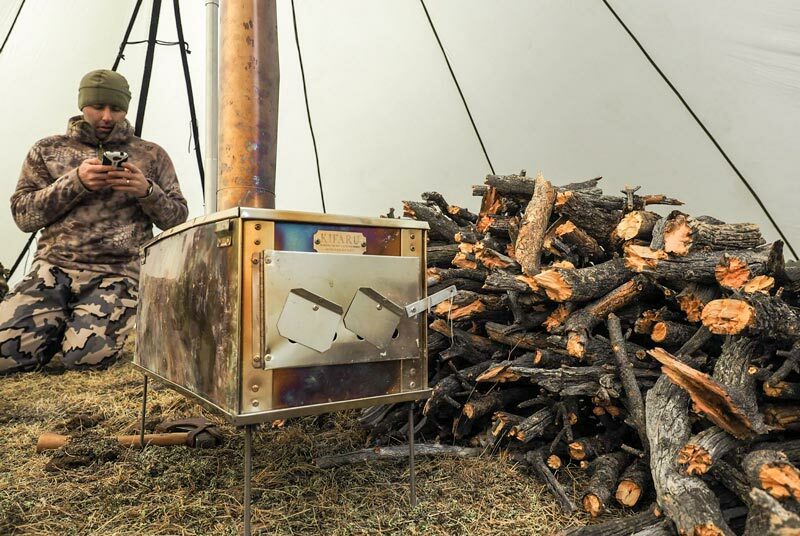
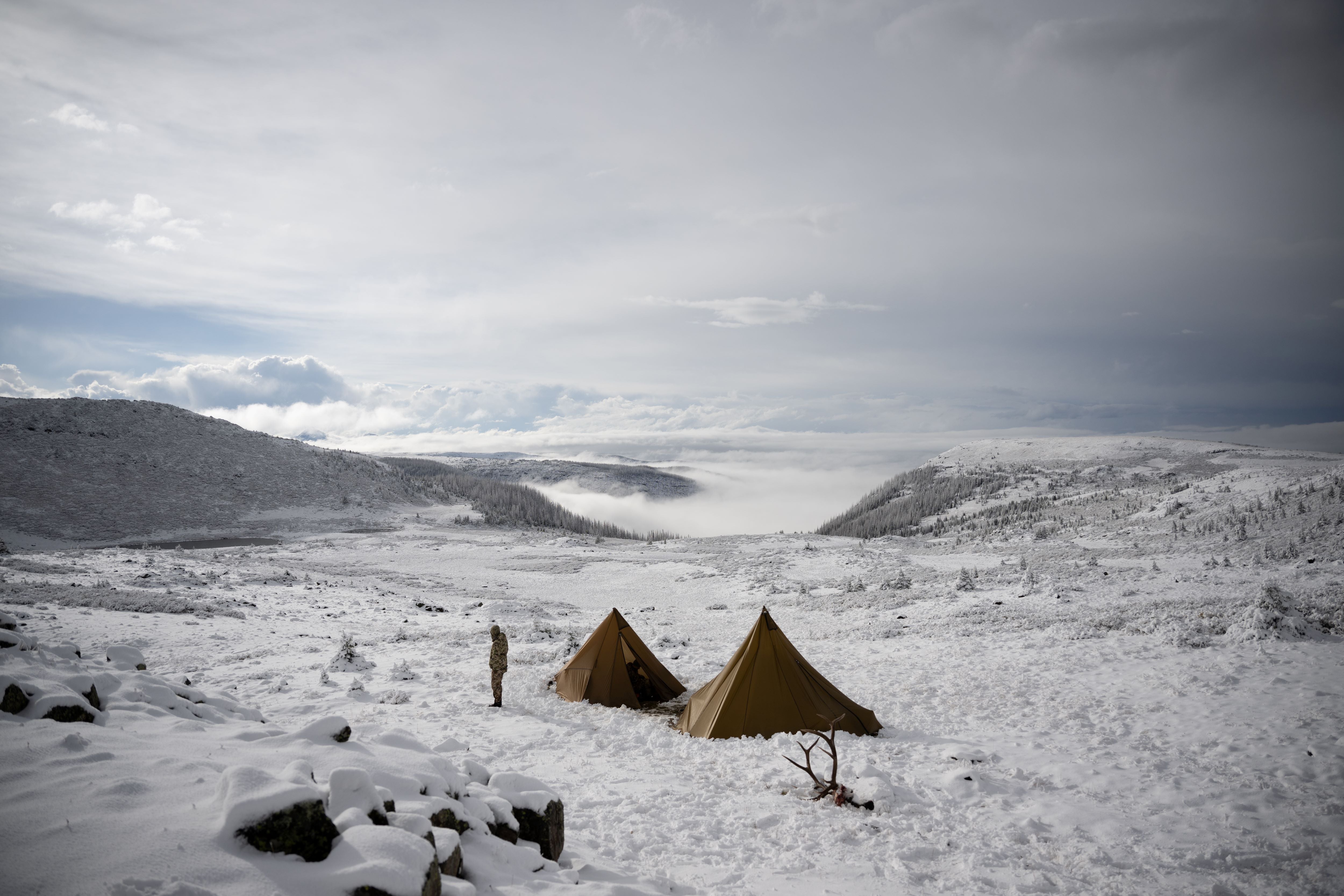
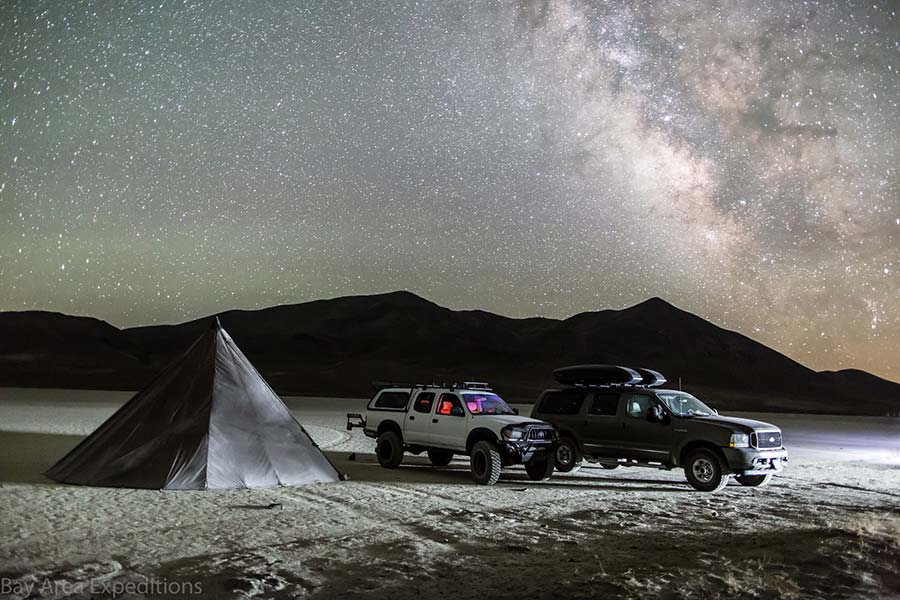
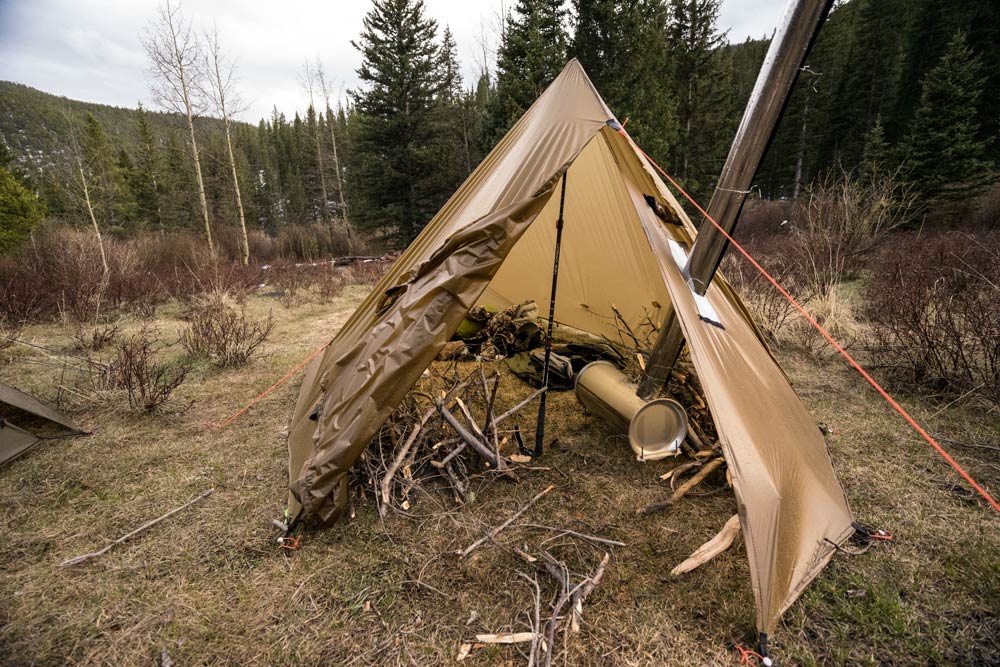
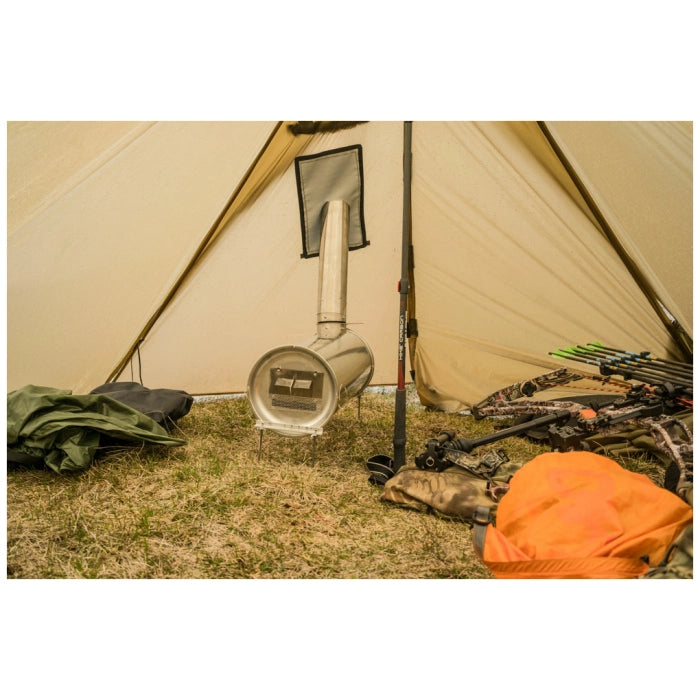
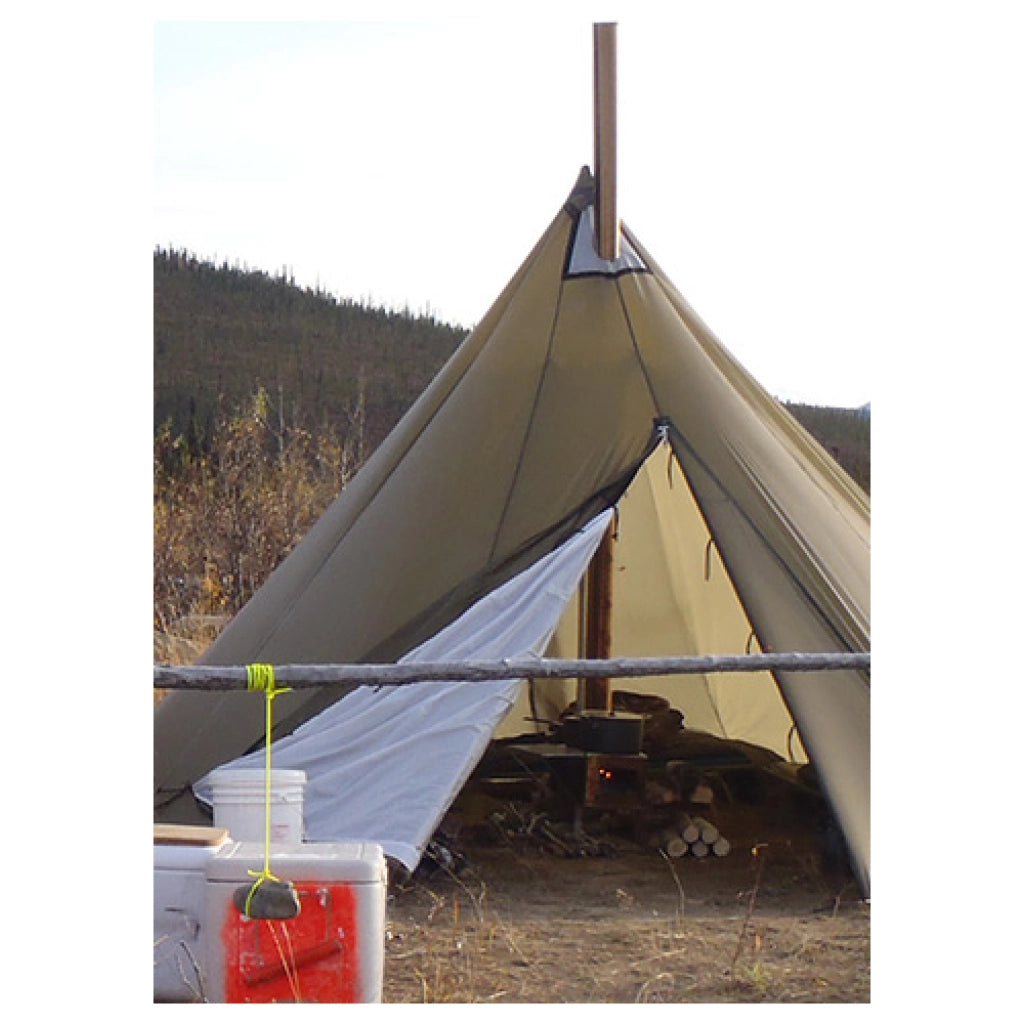
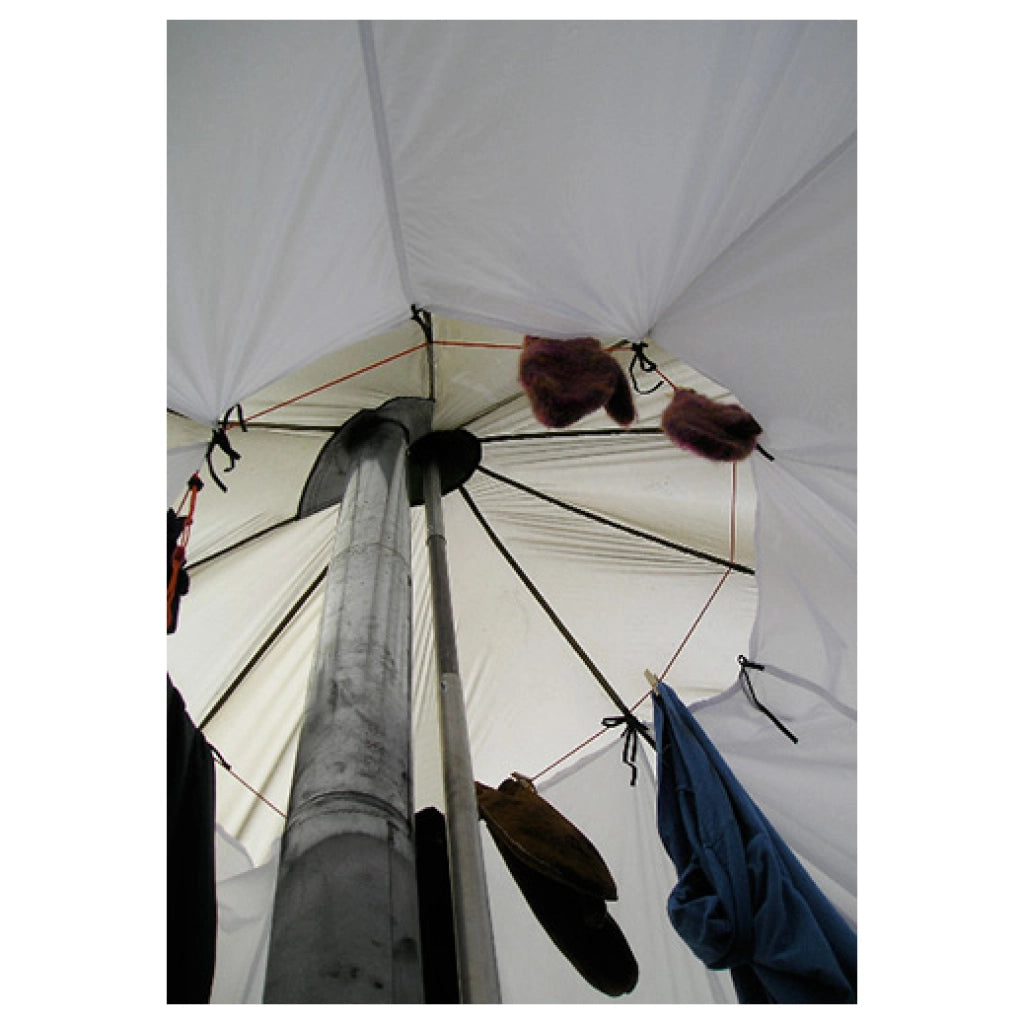
Kifaru Tipis are the largest and lightest four season shelters we know of, and accommodate up to 24 people, and a mountain of gear. You have full stand-up headroom, space enough to sprawl in comfort and plenty of camaraderie! These Tipis are ideal base camps for any big adventure.


askldf

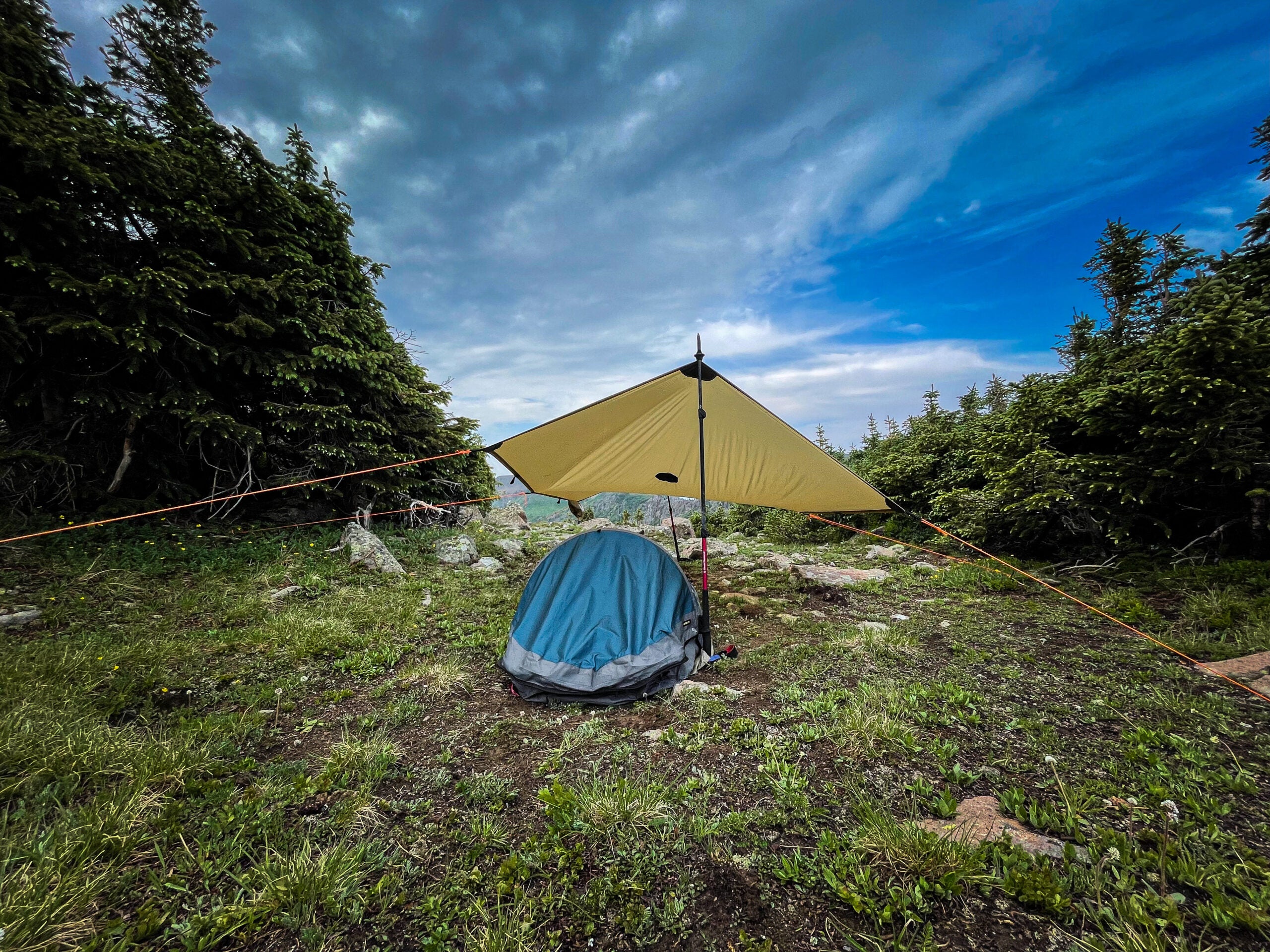
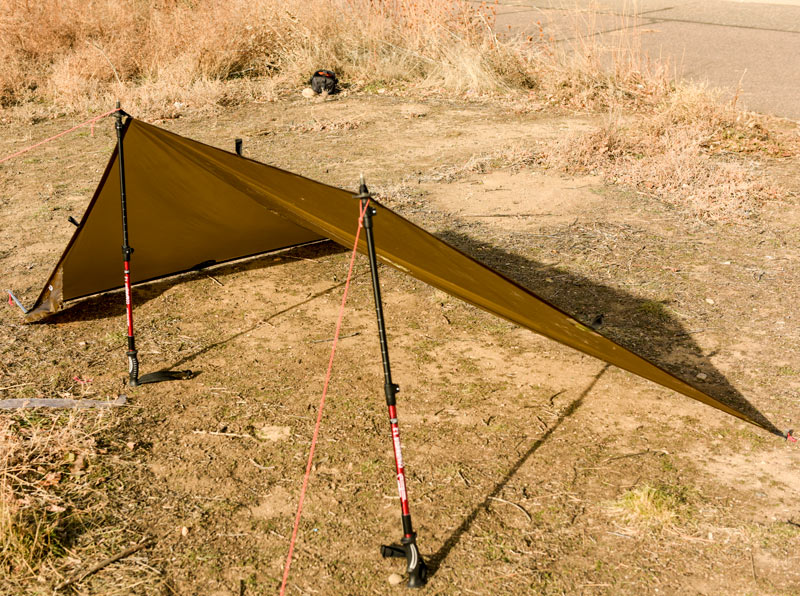
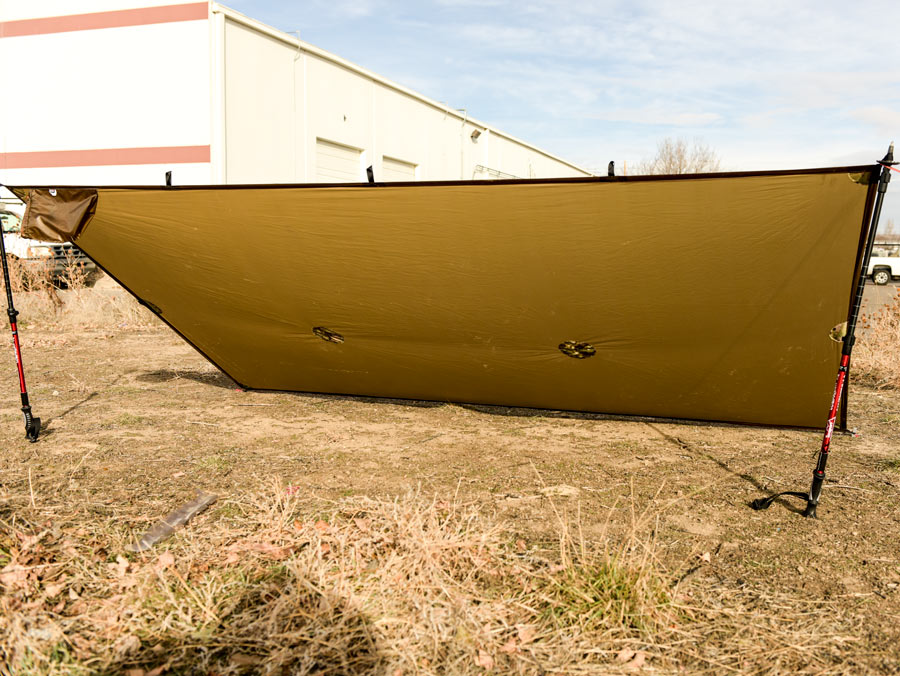
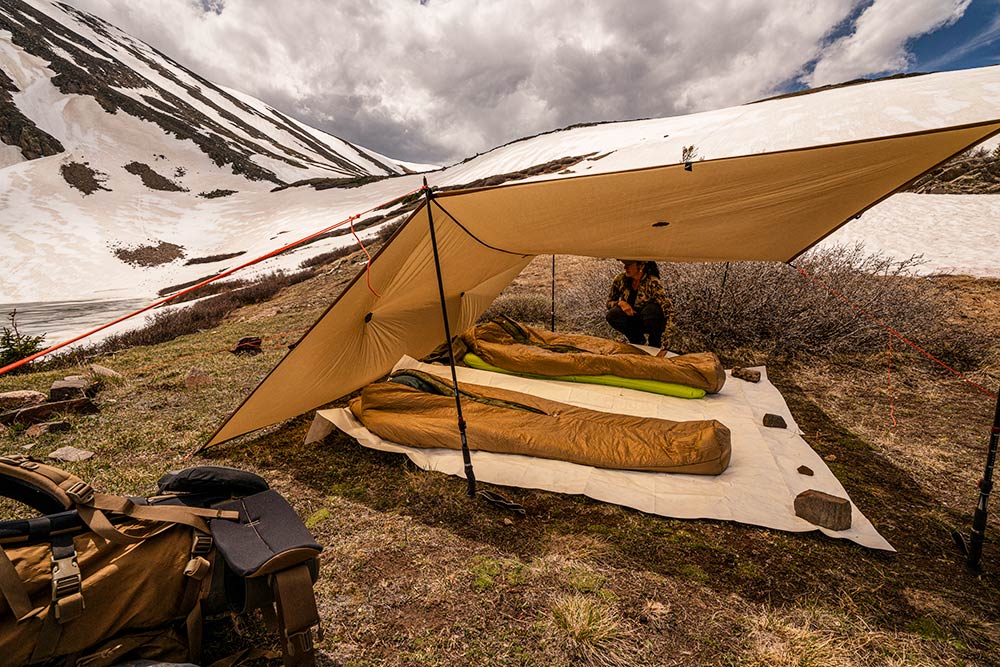
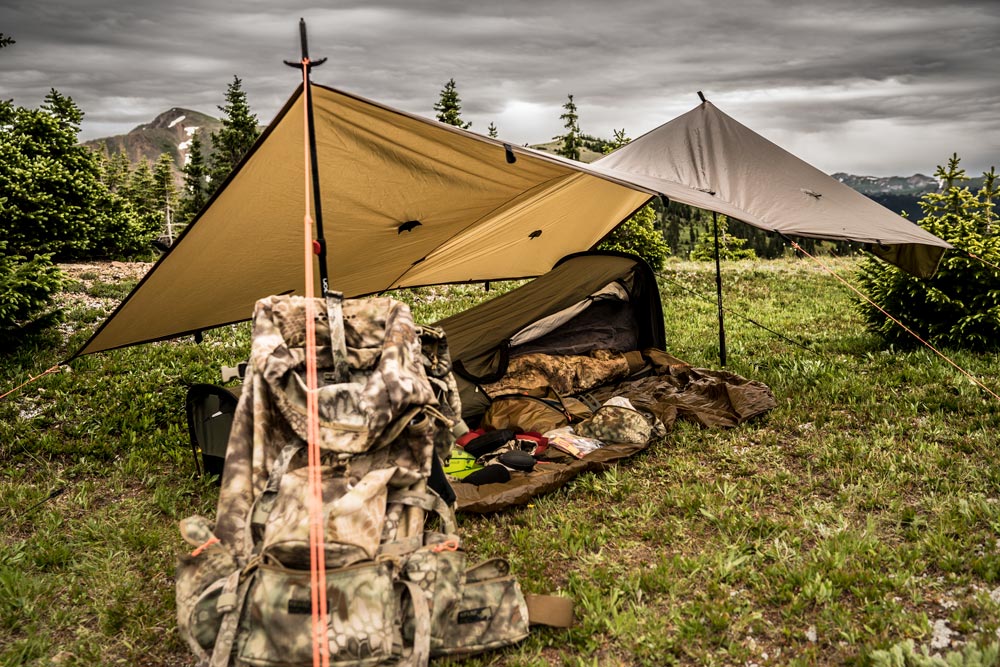
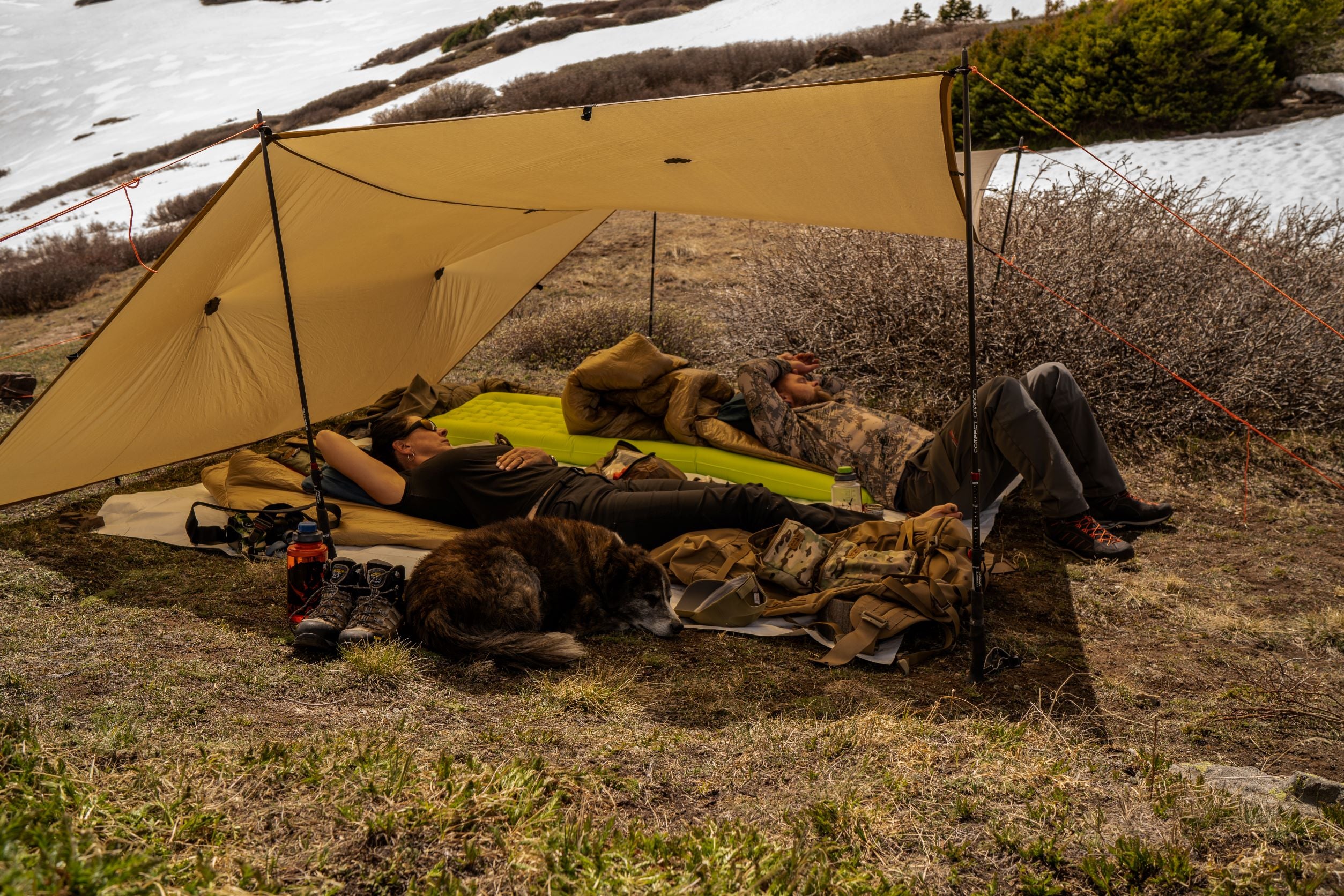
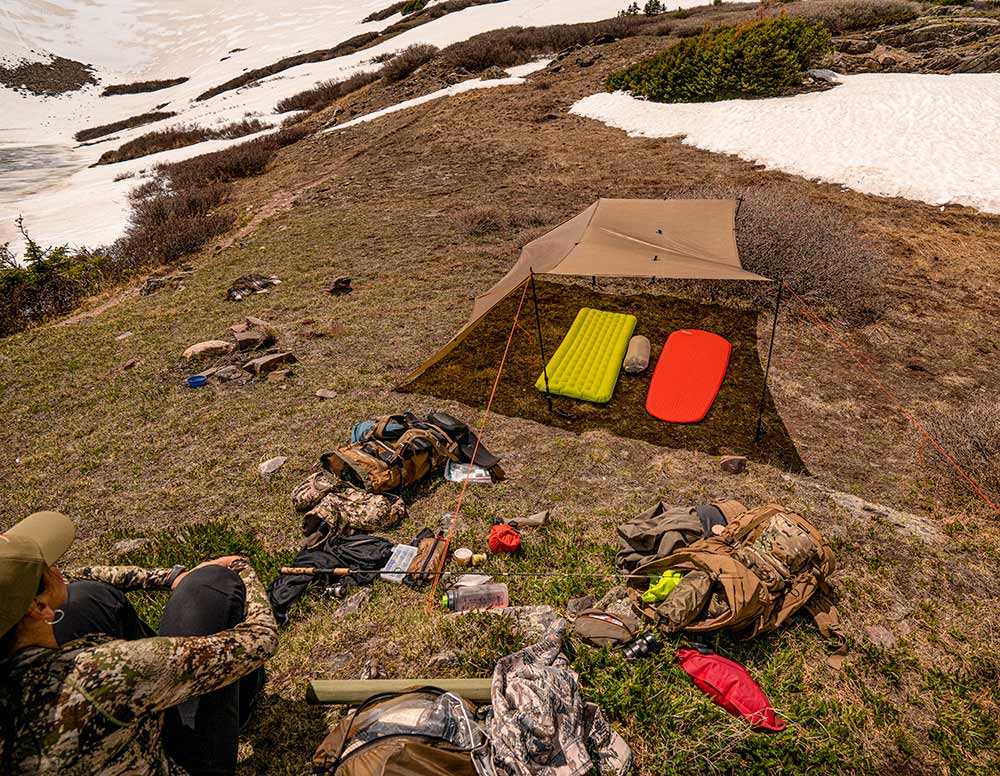
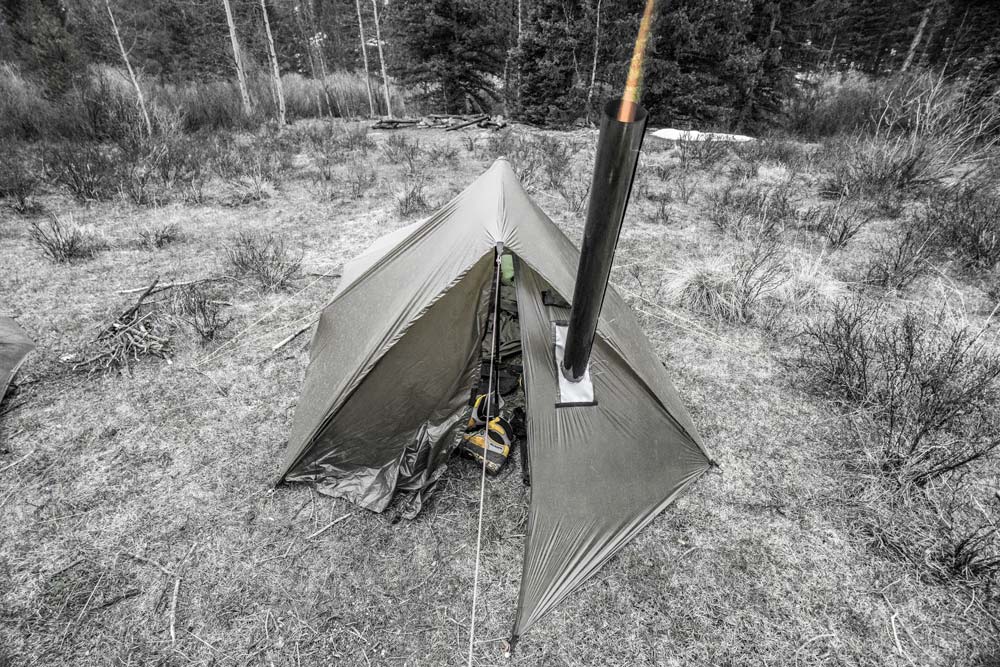
Check out our latest shelter - the two man Sawtooth. The comfort of a Tipi, the packability of a tarp.

upgrades

view cart cart

tipimain

size size size


Ultralight Kifaru Tipi Fabric
This stellar fabric provides classic function and utility at about one pound per person.
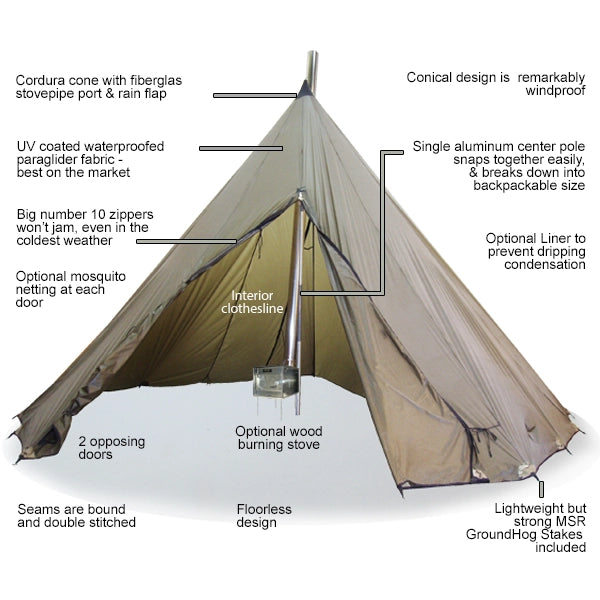
It has proven to be extremely lightweight and puncture proof, with a high thread count, and is coated on both sides for UV resistance and has proven to be extremely waterproof. Perfect for those who need square footage, but minimal weight. Without a doubt, the largest, lightest shelters available!

A Conical Design: The conical shape has no big flat sides to catch wind (or snow), so it swirls around it, and not against it. These Tipis have held up great (when all other tents have been flattened) under gale force winds and have been in places like the Antarctic and Mt. Everest where the winds are legendary. As a result, you have an OVAL footprint and not round.

Sizes. The number specified denotes the number of people that it can sleep based on mountaineering standards - you may wish to accommodate fewer folks for actual "living" room.

tipi comparative size


Tipis
4 Man
6 Man
8 Man
12 Man
16 Man
24 Man


Bivy/solo shelters
ParaTipi
ParaTarp
SuperTarp

Sawtooth tarp/tipi
Tactical Shelters


IMPORTANT: this item is custom made and may take from 4 to 6 weeks for delivery.

SHIPPING COSTS: will be emailed separately in order to give you the best possible price.
Please Note: seam sealing is done by the customer. Seam Sealer is provided. See Shelter Care for instrucions.

  • Fabric
  • Care
  • Setup
  • Warranty
  • Specs
  • History
  • Videos
  • Literature

Shelter Fabrics & Colors

Ultralight Fabric (Ultralight Kifaru Tipi )
The Ultralights utilize a unique fabric that has proven to be extremely lightweight and durable.
History: We are enormously pleased with this fabric, and  have had a test Tipi in use since 1998, and it has held up remarkably well. Our Ultralight Tipis have been in production since summer of 2000.
Durability:   A ultra high thread count makes it  harder to tear or puncture (it stretches, rather than pops) and is much lighter than Ripstop.
Waterproofing: It is coated on both sides with silicone, making it even more waterproof than Ripstop. A test bag filled with water hung for several days without  a drip.
The disadvantage is that yes, it contains water -  which means condensation. We do offer liners to alleviate that problem for folks who camp in Alaska or Minnesota where it might be quite humid. If humidity is a factor where you camp, call us about a liner.
Since this fabric absorbs NO moisture, it is much less prone to mildew if stored damp.

Colors. All our shelters are offered in either White or Coyote Brown.

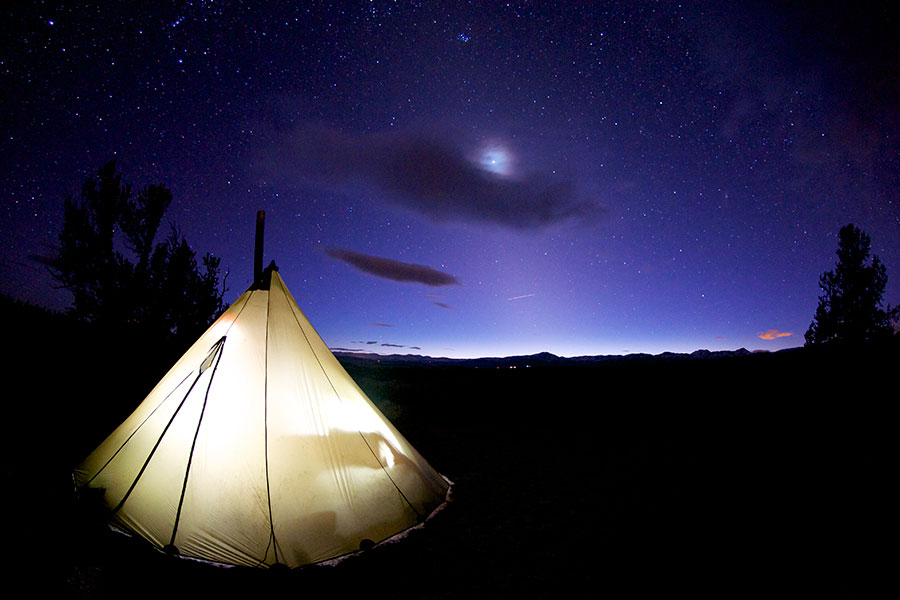
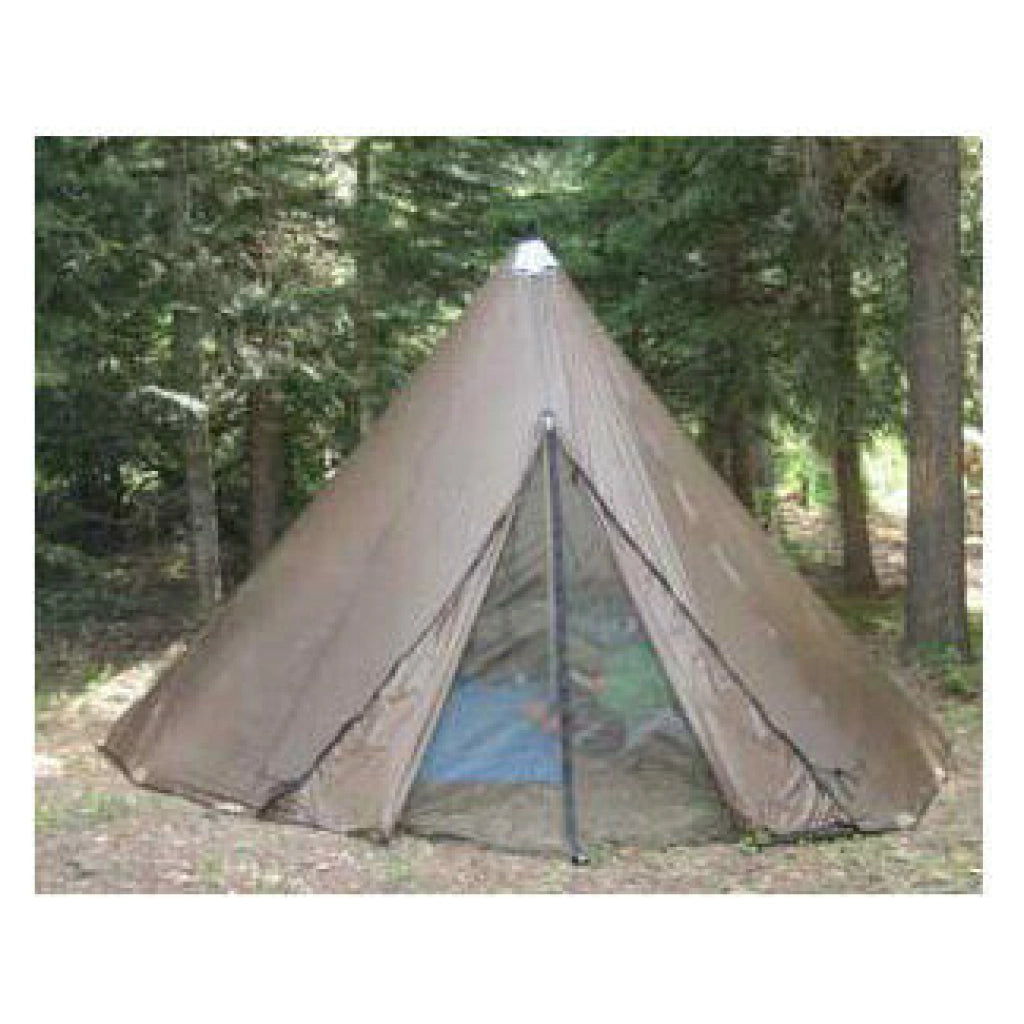
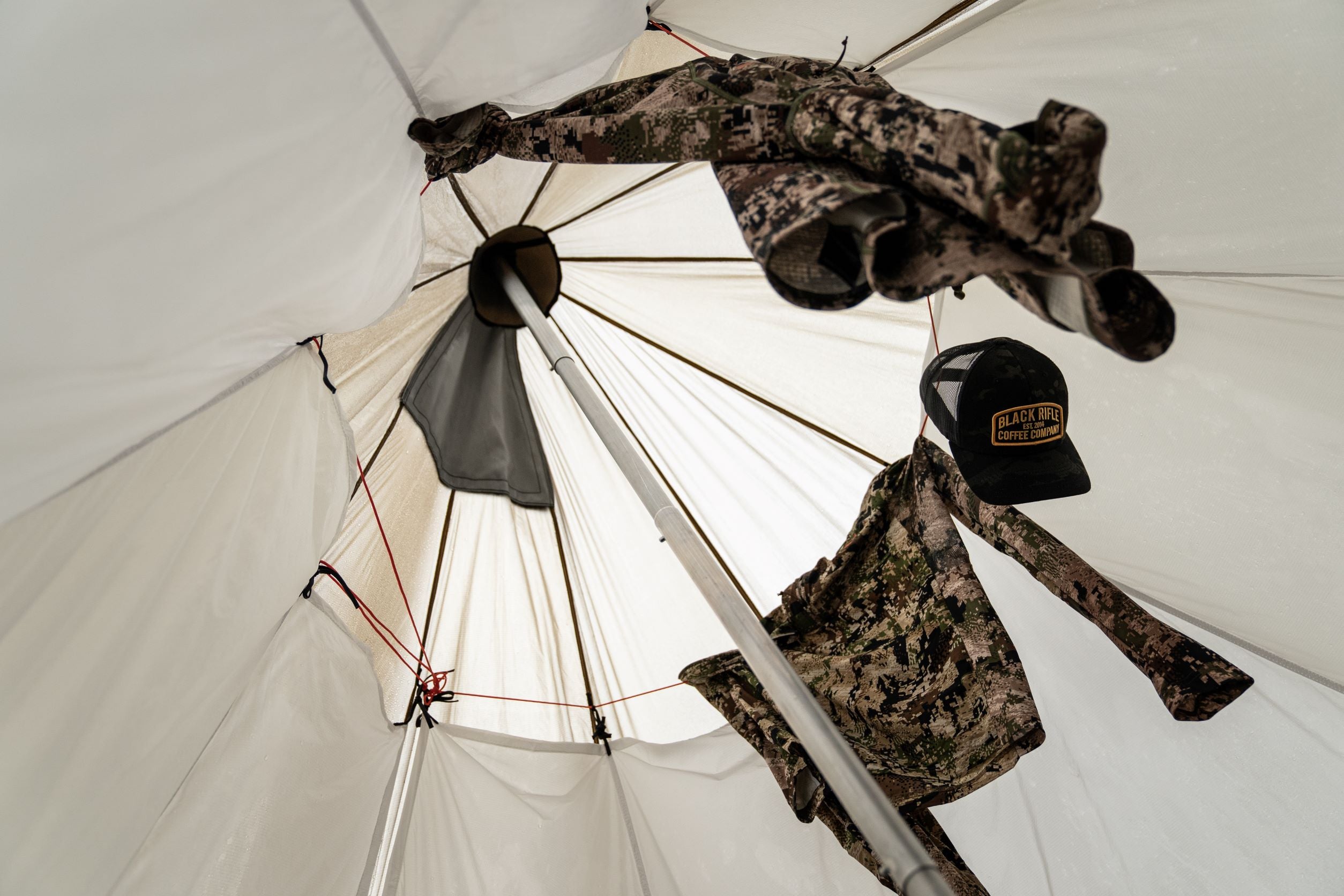
Coyote Brown was introduced several years ago, and has been extremely popular due to it's easy-on-the-eye earthtone exterior, yet surprisingly it is bright on the inside! Please note: the interior does not have a white coating - this fabric is transparent enough to let in plenty of light, yet offers privacy.


UV Rays: Any nylon structure will suffer from UV rays if  allowed to remain erected for prolonged periods of  time. We strongly recommend NOT using your Kifaru shelter as a permanent structure.

Storage: The greatest harm to Tipi fabric is usually not from abuse or critters, it is improper storage. After your trip, make sure your Tipi is free of any moisture or organic materials - these can eat away at the fabric during storage. Air dry and store out of direct sunlight.
Mildew - should you find mildew on your Shelter, simply remove spots with a bit of vinegar.

Washing: the agitation of machine washing can damage the UV coatings on outdoor fabrics. We recommend sponge bathing with Woolite (no bleach), and hanging to dry.

Seam Sealing

youtube   see our video Seam Sealing a Tipi

1. Pitch the Tipi: for best results, pitch the tipi tight - this will allow the sealer to penetrate and waterproof the stretched seams, stitch holes and the thread, and allows more surface coverage so the next time your Tipi is pitched, the seam sealer won't crack or separate.
2. Fabric & Sealant: The fabric should be clean and dry, however, this sealer claims to cure in wet or damp conditions. Using a paper cup, mix sealant and mineral spirit (paint thinner) until you have a slurry about the thickness of molasses. Using a 1/2" inch paint brush, apply to all sewn areas, seams, bartacks and holes - don't forget every stitchline on the cone!
3. Curing:  leave the tent pitched until the sealant is not tacky.  The longer the better.  The sealant fully cures in 24 hours but dries tack free in about 30 minutes to 1 hour. Clean up hands and other areas with a dry paper towel.

Tipi Set Up

step 2


step 3

STEP 1. Make sure zipper is closed, and if you're using a stove, this is the time to open the flue portal. Stretch the Tipi out so that a door faces the wind.
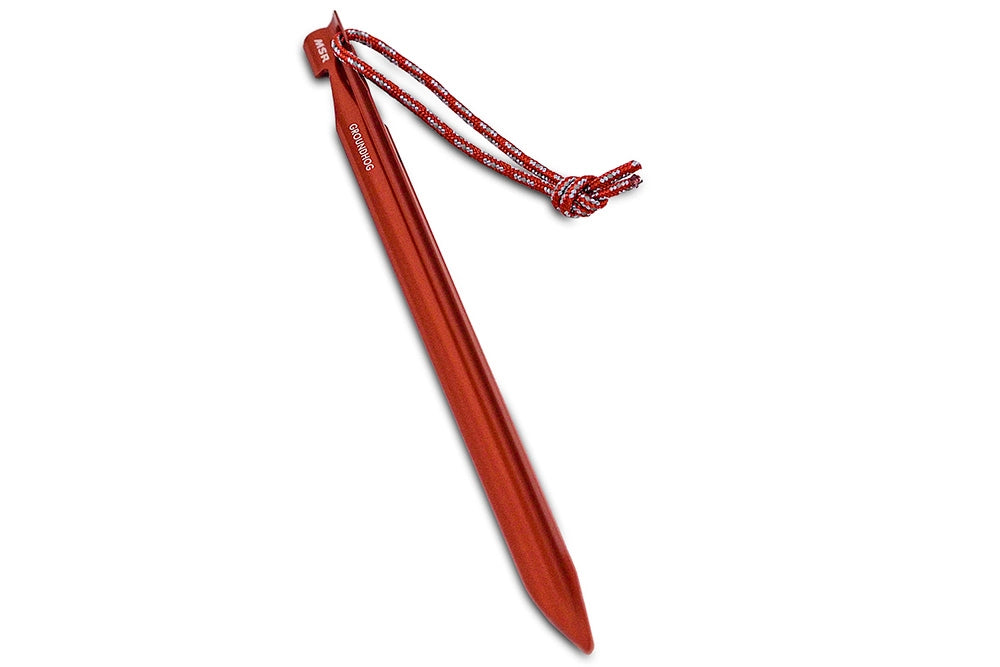
Drive a 10 inch peg through BOTH anchor loops of the door. 
 
STEP 2. Stretch the Tipi out completely from this point and pull it quite snug.

setup

  step5
STEP 3. From this point,  measure back the specified amount  (you can us a 10 inch peg for measuring).
SETBACK LENGTHS (in inches)
4 Man: 28 in.  (2.8 peg lengths)
6 Man: 38 in.  (3.8 peg lengths)
8 Man: 48 in. (4.80 peg lengths)
12 Man: 53 in. (5.33 peg lengths)

16 Man: 68 in. (6.83 peg lengths)
24 Man: to come
 
STEP 4. Drive a 10 inch peg through BOTH loops of the back door at the setback (again, make sure the zippers are completely zipped).

step 8

  step7
STEP 5. Stretch out one of the center sides 'til snug and peg lightly. Pull out the other side  'til taught, begin your setback measurements. 
Centers are marked with yellow tabs.
STEP 6. Measure back toward the center of the tipi, and stake this anchor with a 10 inch peg.
SETBACK LENGTHS (in inches)
4 Person: 7 in.  (.75 peg lengths)
6 Man: 9.5 in.  (1 peg lengths)
8 Person:
13 in. (1.33 peg lengths)
12 Person: 10 in. (1 peg length)

16 Man: 17 in. (1.7 peg lengths)
24 Man:to come

step 9

  step 10
STEP 7. Pole Assembly.  Slide the lower pole into bottom of center sleeve and affix at the shortest (last) position. Unzip your door without unpegging it, and enter.  
  Seat the pole into the black cone at the top of your Tipi (making sure to avoid the clothesline). 
STEP 8. Raise the whole tent by pushing upard on the pole as you swingit into the center. You may need a flat rock or a peg on it's side to prevent pole from sinking into soggy ground. Press the spring clip of the top pole, and raise it to the locator hole or until tipi fabric is taut. 
final   STEP 9. Exit the Tipi and zip the door completely down (if you do not do this, and install the remaining pegs, you won't be able to close the zipper). Anchor the remianing points of your Tipi with the shorter pegs,  doing so in a pattern that starts at the sides, and install going toward the doors. Alternate sides, two or three loops at a time,  pulling the tipi down and out tightly as you install each peg. This will give you a snug, windproof pitch. hammer each peg to ground level or just below for a tipi-to-ground fit.

Fine Tuning
Wet weather: you may want to raise the pole a bit if the Tipi gets wet - no need to reset the stakes.
Wind: In very windy conditions, you can pet out the extra cord loops located part way up your Tipi - they're designed to peg close to the Tipi so you won't be tripping over them

All our shelters are guaranteed against defects in materials and workmanship. Should they ever fail to provide satisfaction because of defects in materials or workmanship, we will repair or replace it at no cost to you. Materials may naturally break down over an extended use and time, particularly with long setups in direct sunlight - these shelters are not intended to be used as permanent camps. Problems associated with this or normal wear , abuse or improper care will mean a reasonable repair or replacement charge. Please see Shelter Care for more information.

Kifaru Stoves
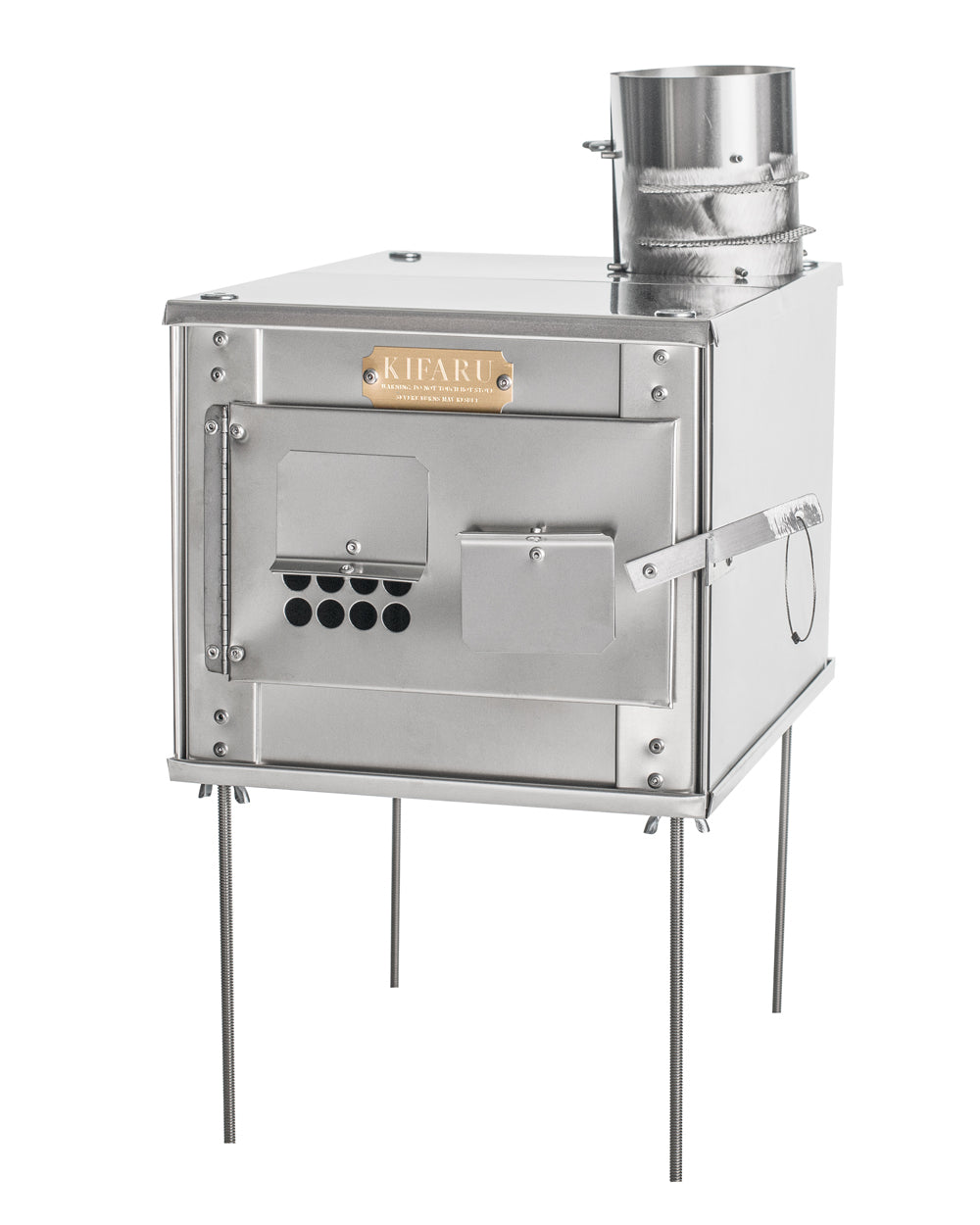
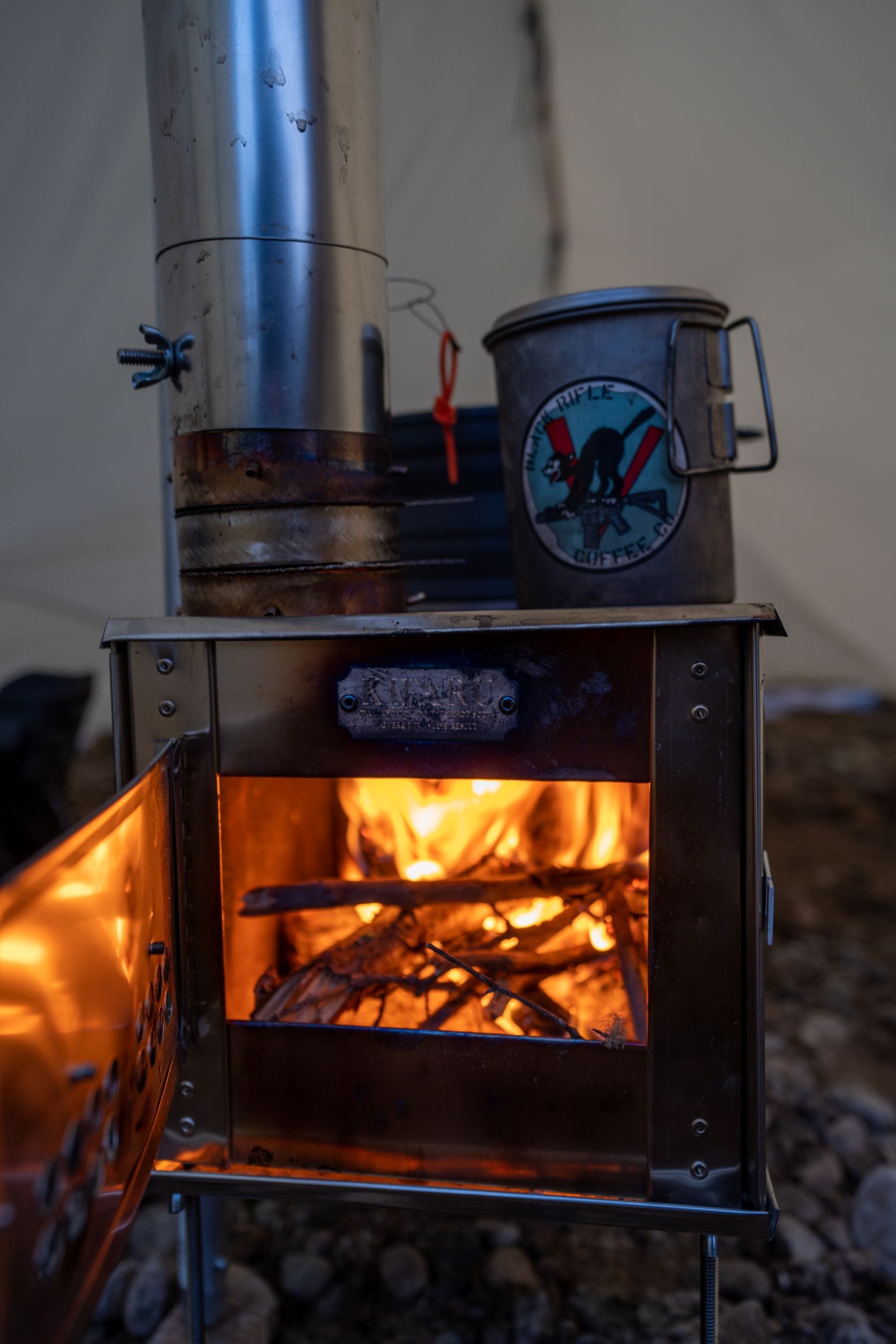
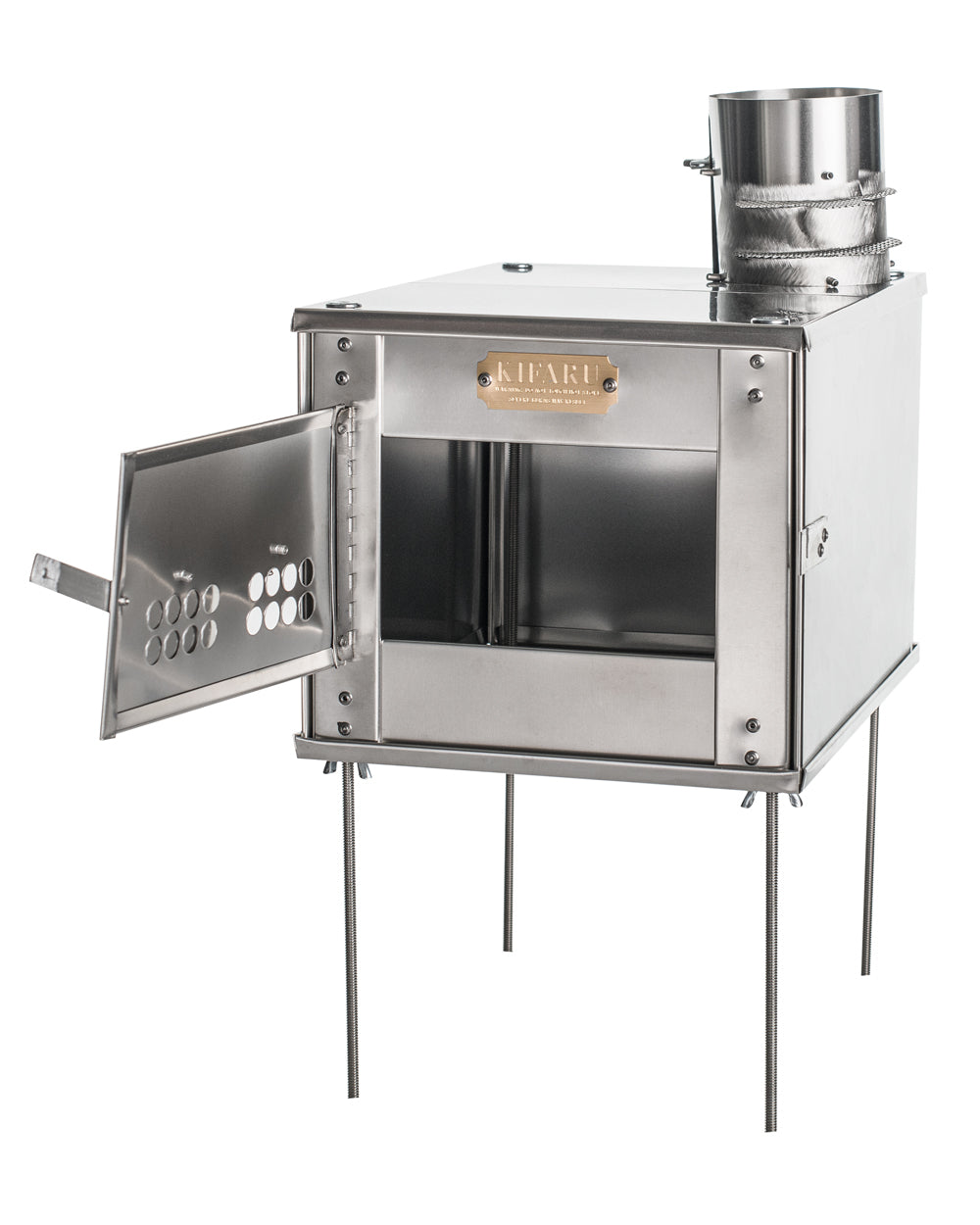
Kifaru stoves have a lifetime guarantee against defects in materials and workmanship. As they are built of stainless steel, they will last FAR longer than sheet metal stoves. The stoves we built in 1998 are still going strong. The ONLY instances of thru-the-metal corrosion that have occurred are due to consistent usage in salt water environments. No stove is impervious to this, and so such users will have to consider eventually buying a new stove or replacement stove parts as a cost of enjoying those outdoor pursuits. Again, this is the ONLY reason our stoves should not last for decades, perhaps even a lifetime (we are basing this on about 20 years experience with current materials).

Returns
We understand that it can be difficult buying a product that is not on a shelf where you can try it out, touch it, feel it. These are built-to-order products. If you receive your order, and decide that it is just not for you, return it in unused, new condition WITHIN 30 DAYS for a full product refund (excluding shipping charges). You will also need to call for a return authorization. We offer counseling on the proper use and fit (if applicable) by email or phone, and we have an excellent record in assisting folks with the "learning curve" in getting top performance with our technical gear. We're happy to help!
TIPI SIZE
OVERALL WEIGHT
PACKED SIZE
FOOTPRINT
Length
Width
ASSEMBLED HEIGHT
24 Man 27 lbs. 13 oz. two bags:
28 ft.
26 ft.
15 ft.
16 Man
14 lbs. 12 oz.
two bags:
24 X 9 &
28 X 5 in.
22 ft. 8 in
20 ft. 8 in
10 ft.
12 Man
11 lbs. 1 oz.
12.5 X 24 in.
20 ft.
17 ft.
10 ft. 6 in.
8 Man
7 lbs. 10.5 oz.
10 X 23 in.
18 ft.
15 ft.
8 ft. 6 in.
6 Man
6 lbs. 4 oz.
7.75 X 23 in.
14 ft. 10 in.
13 ft. 2in.
7 ft. 6 in.
Sawtooth
4 lbs. 8 oz.
three bags:
23 X 4
12 X 9 in
12 X 4 in. .
13 ft. 9 in.
9 ft., 9 in.
6 ft. 11 in.
4 Man
5 lbs. 5 oz.
8 X 22 in.
13 ft.
10 ft. 5in.
6 ft. 6 in.
ParaTipi
3 lbs. 8 oz.
5.5 X 16 in.
12 ft.
7 ft. 6in.
56 in.
ParaTarp
11 oz.
4.5 X 8.5 in
9 ft. 6 in.
front: 8 ft.
rear: 5 ft.
up to 42 in.
SuperTarp
16 oz.

6 X 1.75 x 10 in..

12 ft. 2 in.

front: 9 ft. 2in
rear: 6 ft. 5in

front:72 in. set up as A-frame

up to 52 in.
ParaTarp with Peg & Pole Kit
1 lb. 13 oz
     
SuperTarp
with Peg & Pole Kit
2 lbs. 4 oz
     

A Little History

blackfeet tipi

Though the term "nomad" rings with adventure, pre-Columbian Indians were nomadic by circumstance, and not by choice -   harsh, subsistence level living that meant following not only game, but whatever wild plant might be edible at the time. Cabeza de Vaca describes his encounters with American Indians who lived on nothing but prickly pears and roots for months at a time, only to migrate elsewhere to do the same. In short, they starved most of the time. Their tiny lodges were transported on foot, and when their dogs did not become dinner, they were employed to pull the load on a travois - the larger ones being able to pull up to about 75 pounds.  Then, the typical lodge was deer or buffalo hide, and never much larger than 8 to 14 feet across, and had very few poles in an effort to economize on weight.  

  The Spanish horse changed all that. From about 1541 on, horses spread across the Americas, extending the territory of the Indian, and allowing tribes greater access to one another. Game became a larger part of their diet as well, and the whole culture changed as a result. The tipis grew as well - the average size of the Tipi footprint nearly doubled to 25 feet in diameter, stood about 15 feet tall, housing up to 10 family members.

  Though most North American natives had a tipi of some sort, the apex of tipi art design rests with the Plains Indians. A spectacularly beautiful shape that provided warmth in the winter, and protection from the sun and wind in the summer. As they aged, the buffalo hide shell took on an almost translucent appearance that glowed from the fire within on a cold winter's night. This shell consisted of 12 or more buffalo hides sewn together with sinew. The hides went through a gamut of curing processes that made them water resistant, flexible and soft, even after getting wet. After sewing the pieces together,  the Tipi was erected smoked with a smudge fire from the inside. After it was cured, the whole thing was turned inside out and smoked again.  This shell was supported by a skeleton of about 18 or 20 cedar or pine poles, and the whole thing weighed in at a whopping 585 pounds (average),  requiring up to 3 horses for transport.  Despite their weight and bulk, this remarkably versatile shelter could be erected in about an hour. Traditionally, the tribal women owned both the Tipis and the transport horses, and were responsible for all transport and set up. 

  Typically, the shape was a tilted cone, with the door  facing the rising sun - the back being steeper than the front to brace against the westerly winds. A tripod was erected, and the shell was attached to a "lifting pole" and put into place, where it was easily unfolded and wrapped around the framework. The vertical seam was then pinned together with wooden pegs and the door flap attached. Additional poles were used to  then to adjust the smoke flaps for wind direction or bad weather. The bottom edges could also be controlled - rolled up in warm weather for ventilation, or sealed tight to the ground with sod, stones, wooden pegs or blocks of snow. As all but the stones were transported, it is still possible to find "tipi rings" on the prairie of the American west.
  Hide liners were typical as well, often painted with religious images or those of war exploits.  In the winter, this liner was stuffed full of grass for insulation - combined with a small fire, this provided a safe haven even with  the unforgiving winds of the plains.

  Though most North American natives had a tipi of some sort, the apex of tipi art design rests with the Plains Indians. A spectacularly beautiful shape that provided warmth in the winter, and protection from the sun and wind in the summer. As they aged, the buffalo hide shell took on an almost translucent appearance that glowed from the fire within on a cold winter's night. This shell consisted of 12 or more buffalo hides sewn together with sinew. The hides went through a gamut of curing processes that made them water resistant, flexible and soft, even after getting wet. After sewing the pieces together,  the Tipi was erected smoked with a smudge fire from the inside. After it was cured, the whole thing was turned inside out and smoked again.  This shell was supported by a skeleton of about 18 or 20 cedar or pine poles, and the whole thing weighed in at a whopping 585 pounds (average),  requiring up to 3 horses for transport.  Despite their weight and bulk, this remarkably versatile shelter could be erected in about an hour. Traditionally, the tribal women owned both the Tipis and the transport horses, and were responsible for all transport and set up. 

  Typically, the shape was a tilted cone, with the door  facing the rising sun - the back being steeper than the front to brace against the westerly winds. A tripod was erected, and the shell was attached to a "lifting pole" and put into place, where it was easily unfolded and wrapped around the framework. The vertical seam was then pinned together with wooden pegs and the door flap attached. Additional poles were used to  then to adjust the smoke flaps for wind direction or bad weather. The bottom edges could also be controlled - rolled up in warm weather for ventilation, or sealed tight to the ground with sod, stones, wooden pegs or blocks of snow. As all but the stones were transported, it is still possible to find "tipi rings" on the prairie of the American west.
  Hide liners were typical as well, often painted with religious images or those of war exploits.  In the winter, this liner was stuffed full of grass for insulation - combined with a small fire, this provided a safe haven even with  the unforgiving winds of the plains.

tipi ring


Stone tipi rings like this can still be found thoughout
much of the American west


Unfortunately, a  buffalo hide tipi only lasted about 2 years, and as the herds disappeared, so did the classic hide tipi.  Government issued canvas proved to be a sturdy, pliable, rugged and lightweight alternative. A classic era is gone, but the beauty and efficiency of an ancient design still enchants us and has a place in the modern nomad's world.